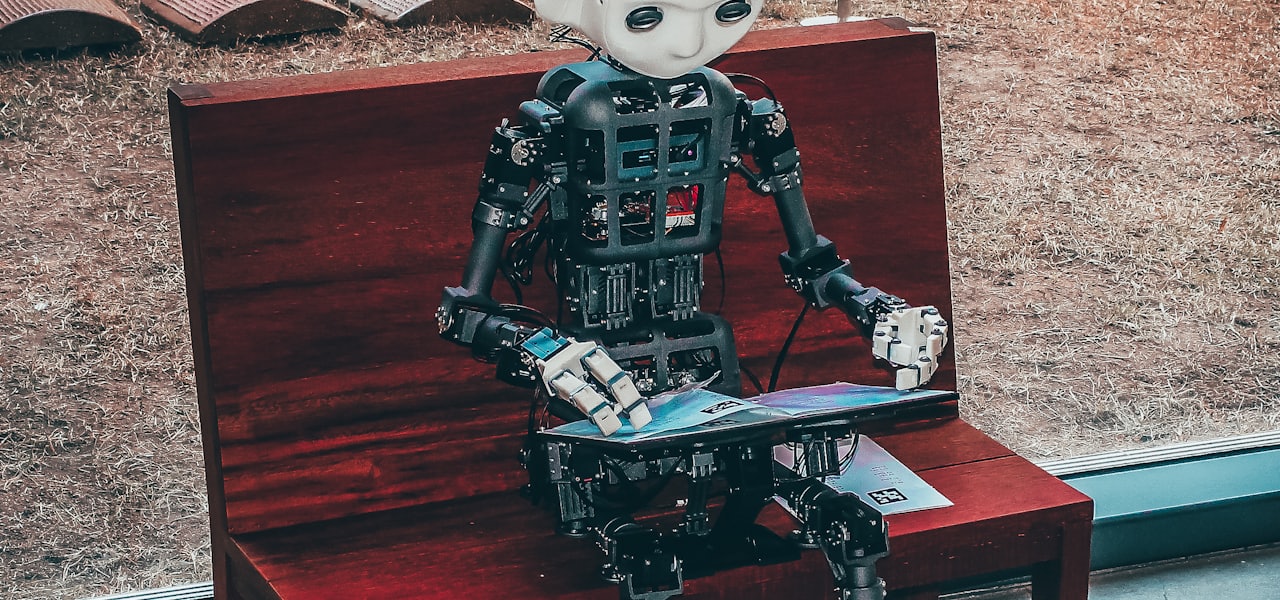
Bin picking (also referred to as random bin picking) is a core problem in computer vision and robotics. The goal is to have a robot with sensors and cameras attached to it pick-up known objects with random poses out of a bin using a suction gripper, parallel gripper, or other kind of robot end effector. Early work on bin picking made use of Photometric Stereo in recovering the shapes of objects and to determine their orientation in space. Amazon previously held a competition focused on bin picking referred to as the "Amazon Picking Challenge", which was held from 2015 to 2017. The challenge tasked entrants with building their own robot hardware and software that could attempt simplified versions of the general task of picking and stowing items on shelves. The robots were scored by how many items were picked and stowed in a fixed amount of time. The first Amazon Robotics challenge was won by a team from TU Berlin in 2015, followed by a team from TU Delft and the Dutch company "Fizyr" in 2016. The last Amazon Robotics Challenge was won by the Australian Centre for Robotic Vision at Queensland University of Technology with their robot named Cartman. The Amazon Robotics/Picking Challenge was discontinued following the 2017 competition. Although there can be some overlap, bin picking is distinct from "each picking" and the bin packing problem.
Attensity
Attensity was an American company that provided social analytics and engagement applications for social customer relationship management (social CRM). Attensity's text analytics software applications extracted facts, relationships and sentiment from unstructured data. == History == Attensity was founded in 2000. An early investor in Attensity was In-Q-Tel, which funds technology to support the missions of the US Government and the broader DOD. InTTENSITY, an independent company that has combined Inxight with Attensity Software (the only joint development project that combines two InQTel funded software packages), was the exclusive distributor and outlet for Attensity in the Federal Market. In 2009, Attensity Corp., then based in Palo Alto, merged with Germany's Empolis and Living-e AG to form Attensity Group. In 2010, Attensity Group acquired Biz360, a provider of social media monitoring and market intelligence solutions. In early 2012, Attensity Group divested itself of the Empolis business unit via a management buyout; that unit currently conducts business under its pre-merger name. Attensity Group was a closely held private company. Its majority shareholder was Aeris Capital, a private Swiss investment office advising a high-net-worth individual and his charitable foundation. Foundation Capital, Granite Ventures, and Scale Venture Partners were among Biz360's investors and thus became shareholders in Attensity Group. In February 2016, Attensity's IP assets were acquired by InContact, and Attensity closed.
Macromedia FreeHand
Macromedia FreeHand (formerly Aldus FreeHand) is a discontinued computer application for creating two-dimensional vector graphics oriented primarily to professional illustration, desktop publishing and content creation for the Web. FreeHand was similar in scope, intended market, and functionality to Adobe Illustrator, CorelDRAW and Xara Designer Pro. Because of FreeHand's dedicated page layout and text control features, it also compares to Adobe InDesign and QuarkXPress. Professions using FreeHand include graphic design, illustration, cartography, fashion and textile design, product design, architects, scientific research, and multimedia production. FreeHand was created by Altsys Corporation in 1988 and licensed to Aldus Corporation, which released versions 1 through 4. In 1994, Aldus merged with Adobe Systems and because of the overlapping market with Adobe Illustrator, FreeHand was returned to Altsys by order of the Federal Trade Commission. Altsys was later bought by Macromedia, which released FreeHand versions 5 through 11 (FreeHand MX). In 2005, Adobe Systems acquired Macromedia and its product line which included FreeHand MX, under whose ownership it presently resides. Since 2003, FreeHand development has been discontinued; in the Adobe Systems catalog, FreeHand has been replaced by Adobe Illustrator. FreeHand MX continues to run under Windows 11 and under Mac OS X 10.6 (Snow Leopard) within Rosetta, a PowerPC code emulator, and requires a registration patch supplied by Adobe. FreeHand 10 runs without problems on Mac OS X Snow Leopard with Rosetta enabled, and does not require a registration patch. Later versions of macOS can use a Mac OS X Snow Leopard Server virtual machine to emulate the required PowerPC support. == History == === Altsys and Aldus FreeHand === In 1984, James R. Von Ehr founded Altsys Corporation to develop graphics applications for personal computers. Based in Plano, Texas, the company initially produced font editing and conversion software; Fontastic Plus, Metamorphosis, and the Art Importer. Their premier PostScript font-design package, Fontographer, was released in 1986 and was the first such program on the market. With the PostScript background having been established by Fontographer, Altsys also developed FreeHand (originally called Masterpiece) as a Macintosh Postscript-based illustration program that used Bézier curves for drawing and was similar to Adobe Illustrator. FreeHand was announced as "... a Macintosh graphics program described as having all the features of Adobe's Illustrator plus drawing tools such as those in Mac Paint and Mac Draft and special effects similar to those in Cricket Draw." Seattle's Aldus Corporation acquired a licensing agreement with Altsys Corporation to release FreeHand along with their flagship product, Pagemaker, and Aldus FreeHand 1.0 was released in 1988. FreeHand's product name used intercaps; the F and H were capitalized. The partnership between the two companies continued with Altsys developing FreeHand and with Aldus controlling marketing and sales. After 1988, a competitive exchange between Aldus FreeHand and Adobe Illustrator ensued on the Macintosh platform with each software advancing new tools, achieving better speed, and matching significant features. Windows PC development also allowed Illustrator 2 (aka, Illustrator 88 on the Mac) and FreeHand 3 to release Windows versions to the graphics market. FreeHand 1.0 sold for $495 in 1988. It included the standard drawing tools and features as other draw programs including special effects in fills and screens, text manipulation tools, and full support for CMYK color printing. It was also possible to create and insert PostScript routines anywhere within the program. FreeHand performed in preview mode instead of keyline mode but performance was slower. FreeHand 2.0 sold for $495 in 1989. Besides improving on the features of FreeHand 1.0, FreeHand 2 added faster operation, Pantone colors, stroked text, flexible fill patterns and automatically import graphic assets from other programs. It added accurate control over a color monitor screen display, limited only by its resolution. FreeHand 3.0 sold for $595 in 1991. New features included resizable color, style, and layer panels including an Attributes menu. Also tighter precision of both the existing tools and aligning of objects. FH3 created compound Paths. Text could be converted to paths, applied to an ellipse, or made vertical. Carried over from version 1.0, FreeHand 3 suffered by having text entered into a dialog box instead of directly to the page. In October 1991, a 3.1 upgrade made FreeHand work with System 7 but additionally, it supported pressure-sensitive drawing which offered varying line widths with a users stroke. It improved element manipulation and added more import/export options. FreeHand 4.0 sold for $595 in 1994. Altsys ported FreeHand 3.0 to the NeXT system creating a new program named Virtuoso. Virtuoso continued its development at Altsys and version 2.0 of Virtuoso was feature-equivalent to FreeHand 4 (with the addition of NeXT-specific features such as Services and Display PostScript) and file compatible, with Virtuoso 2 able to open FreeHand 4 files and vice versa. A prominent feature of this version was the ability to type directly into the page and wrap inside or outside any shape. It also included drag-and-drop color imaging, a larger pasteboard, and a user interface that featured floating, rollup panels. The colors palette included a color mixer for adding new colors to the swatch list. Speed increases were made. In the same year of FreeHand 4 release, Adobe Systems announced merger plans with Aldus Corporation for $525 million. Fear about the end of competition between these two leading applications was reported in the media and expressed by customers (Illustrator versus FreeHand and Adobe Photoshop versus Aldus PhotoStyler.) Because of this overlapping of the market, Altsys stepped in by suing Aldus, saying that the merger deal was "a prima facie violation of a non-compete clause within the FreeHand licensing agreement." Altsys CEO Jim Von Ehr explained, "No one loves FreeHand more than we do. We will do whatever it takes to see it survive." The Federal Trade Commission issued a complaint against Adobe Systems on October 18, 1994, ordering a divestiture of FreeHand to "remedy the lessening of competition resulting from the acquisition as alleged in the Commission's complaint," and further, the FTC ordering, "That for a period of ten (10) years from the date on which this order becomes final, respondents shall not, without the prior approval of the Commission, directly or indirectly, through subsidiaries, partnerships, or otherwise .. Acquire any Professional Illustration Software or acquire or enter into any exclusive license to Professional Illustration Software;" (referring to FreeHand.) FreeHand was returned to Altsys with all licensing and marketing rights as well as Aldus FreeHand's customer list. === Macromedia Freehand === By late 1994, Altsys still retained all rights to FreeHand. Despite brief plans to keep it in-house to sell it along with Fontographer and Virtuoso, Altsys reached an agreement with the multimedia software company, Macromedia, to be acquired. This mutual agreement provided FreeHand and Fontographer a new home with ample resources for marketing, sales, and competition against the newly merged Adobe-Aldus company. Altsys would remain in Richardson, Texas, but would be renamed as the Digital Arts Group of Macromedia and was responsible for the continued development of FreeHand. Macromedia received FreeHand's 200,000 customers and expanded its traditional product line of multimedia graphics software to illustration and design graphics software. CEO James Von Ehr became a Macromedia vice-president until 1997 when he left to start another venture. FreeHand 5.0 sold for $595 in 1995. This version featured a more customizable and expanded workspace, multiple views, stronger design and editing tools, a report generator, spell check, paragraph styles, multicolor gradient fills up to 64 colors, speed improvements, and it accepted Illustrator plugins. In September 1995, a 5.5 upgrade added Photoshop plug-in support, PDF import capabilities, the Extract feature, inline graphics to text, improved auto-expanding text containers, the Crop feature, and the Create PICT Image feature. A FreeHand 5.5 upgrade was part of the FreeHand Graphics Studio (a suite that included Fontographer, Macromedia xRes image editing application, and Extreme 3D animation and modeling application). FreeHand 6.0 in 1996. This version only existed in beta. Some Freehand 7 prerelease versions were released under the Freehand 6 tag. FreeHand 7.0 sold for $399 in 1996, or $449 as part of the FreeHand Graphics Studio (see above.) Features included a redesigned user interface that allowed recombining Inspectors, Panel Tabs, Dockable Panels, Smart Cursors,
Medical imaging
Medical imaging is the technique and process of imaging the interior of a body for clinical analysis and medical intervention, as well as visual representation of the function of some organs or tissues (physiology). Medical imaging seeks to reveal internal structures hidden by the skin and bones, as well as to diagnose and treat disease. Medical imaging also establishes a database of normal anatomy and physiology to make it possible to identify abnormalities. Although imaging of removed organs and tissues can be performed for medical reasons, such procedures are usually considered part of pathology instead of medical imaging. Measurement and recording techniques that are not primarily designed to produce images, such as electroencephalography (EEG), magnetoencephalography (MEG), electrocardiography (ECG), and others, represent other technologies that produce data susceptible to representation as a parameter graph versus time or maps that contain data about the measurement locations. In a limited comparison, these technologies can be considered forms of medical imaging in another discipline of medical instrumentation. As of 2010, 5 billion medical imaging studies had been conducted worldwide. Radiation exposure from medical imaging in 2006 made up about 50% of total ionizing radiation exposure in the United States. Medical imaging equipment is manufactured using technology from the semiconductor industry, including CMOS integrated circuit chips, power semiconductor devices, sensors such as image sensors (particularly CMOS sensors) and biosensors, and processors such as microcontrollers, microprocessors, digital signal processors, media processors and system-on-chip devices. As of 2015, annual shipments of medical imaging chips amount to 46 million units and $1.1 billion. The term "noninvasive" is used to denote a procedure where no instrument is introduced into a patient's body, which is the case for most imaging techniques used. == History == In 1972, engineer Godfrey Hounsfield from the British company EMI invented the X-ray computed tomography device for head diagnosis, which is commonly referred to as computed tomography (CT). The CT nucleus method is based on the projecting X-rays through a section of the human head, which are then processed by computer to reconstruct the cross-sectional image, known as image reconstruction. In 1975, EMI successfully developed a CT device for the entire body, enabling the clear acquisition of tomographic images of various parts of the human body. This revolutionary diagnostic technique earned Hounsfield and physicist Allan Cormack the Nobel Prize in Physiology or Medicine in 1979. Digital image processing technology for medical applications was inducted into the Space Foundation's Space Technology Hall of Fame in 1994. By 2010, over 5 billion medical imaging studies had been conducted worldwide. Radiation exposure from medical imaging in 2006 accounted for about 50% of total ionizing radiation exposure in the United States. Medical imaging equipment is manufactured using technology from the semiconductor industry, including CMOS integrated circuit chips, power semiconductor devices, sensors such as image sensors (particularly CMOS sensors) and biosensors, as well as processors like microcontrollers, microprocessors, digital signal processors, media processors and system-on-chip devices. As of 2015, annual shipments of medical imaging chips reached 46 million units, generating a market value of $1.1 billion. == Types == In the clinical context, "invisible light" medical imaging is generally equated to radiology or "clinical imaging". "Visible light" medical imaging involves digital video or still pictures that can be seen without special equipment. Dermatology and wound care are two modalities that use visible light imagery. Interpretation of medical images is generally undertaken by a physician specialising in radiology known as a radiologist; however, this may be undertaken by any healthcare professional who is trained and certified in radiological clinical evaluation. Increasingly interpretation is being undertaken by non-physicians, for example radiographers frequently train in interpretation as part of expanded practice. Diagnostic radiography designates the technical aspects of medical imaging and in particular the acquisition of medical images. The radiographer (also known as a radiologic technologist) is usually responsible for acquiring medical images of diagnostic quality; although other professionals may train in this area, notably some radiological interventions performed by radiologists are done so without a radiographer. As a field of scientific investigation, medical imaging constitutes a sub-discipline of biomedical engineering, medical physics or medicine depending on the context: Research and development in the area of instrumentation, image acquisition (e.g., radiography), modeling and quantification are usually the preserve of biomedical engineering, medical physics, and computer science; Research into the application and interpretation of medical images is usually the preserve of radiology and the medical sub-discipline relevant to medical condition or area of medical science (neuroscience, cardiology, psychiatry, psychology, etc.) under investigation. Many of the techniques developed for medical imaging also have scientific and industrial applications. === Radiography === Two forms of radiographic images are in use in medical imaging. Projection radiography and fluoroscopy, with the latter being useful for catheter guidance. These 2D techniques are still in wide use despite the advance of 3D tomography due to the low cost, high resolution, and depending on the application, lower radiation dosages with 2D technique. This imaging modality uses a wide beam of X-rays for image acquisition and is the first imaging technique available in modern medicine. Fluoroscopy produces real-time images of internal structures of the body in a similar fashion to radiography, but employs a constant input of X-rays, at a lower dose rate. Contrast media, such as barium, iodine, and air are used to visualize internal organs as they work. Fluoroscopy is also used in image-guided procedures when constant feedback during a procedure is required. An image receptor is required to convert the radiation into an image after it has passed through the area of interest. Early on, this was a fluorescing screen, which gave way to an Image Amplifier (IA) which was a large vacuum tube that had the receiving end coated with cesium iodide, and a mirror at the opposite end. Eventually the mirror was replaced with a TV camera. Projectional radiographs, more commonly known as X-rays, are often used to determine the type and extent of a fracture as well as for detecting pathological changes in the lungs. With the use of radio-opaque contrast media, such as barium, they can also be used to visualize the structure of the stomach and intestines – this can help diagnose ulcers or certain types of colon cancer. === Magnetic resonance imaging === A magnetic resonance imaging instrument (MRI scanner), or "nuclear magnetic resonance (NMR) imaging" scanner as it was originally known, uses powerful magnets to polarize and excite hydrogen nuclei (i.e., single protons) of water molecules in human tissue, producing a detectable signal that is spatially encoded, resulting in images of the body. The MRI machine emits a radio frequency (RF) pulse at the resonant frequency of the hydrogen atoms on water molecules. Radio frequency antennas ("RF coils") send the pulse to the area of the body to be examined. The RF pulse is absorbed by protons, causing their direction with respect to the primary magnetic field to change. When the RF pulse is turned off, the protons "relax" back to alignment with the primary magnet and emit radio waves in the process. This radio-frequency emission from the hydrogen atoms on water is what is detected and reconstructed into an image. The resonant frequency of a spinning magnetic dipole (of which protons are one example) is called the Larmor frequency and is determined by the strength of the main magnetic field and the chemical environment of the nuclei of interest. MRI uses three electromagnetic fields: a very strong (typically 1.5 to 3 teslas) static magnetic field to polarize the hydrogen nuclei, called the primary field; gradient fields that can be modified to vary in space and time (on the order of 1 kHz) for spatial encoding, often simply called gradients; and a spatially homogeneous radio-frequency (RF) field for manipulation of the hydrogen nuclei to produce measurable signals, collected through an RF antenna. Like CT, MRI traditionally creates a two-dimensional image of a thin "slice" of the body and is therefore considered a tomographic imaging technique. Modern MRI instruments are capable of producing images in the form of 3D blocks, which may be considered a generalization of the single-slice
Non-native speech database
A non-native speech database is a speech database of non-native pronunciations of English. Such databases are used in the development of: multilingual automatic speech recognition systems, text to speech systems, pronunciation trainers, and second language learning systems. == List == The actual table with information about the different databases is shown in Table 2. === Legend === In the table of non-native databases some abbreviations for language names are used. They are listed in Table 1. Table 2 gives the following information about each corpus: The name of the corpus, the institution where the corpus can be obtained, or at least further information should be available, the language which was actually spoken by the speakers, the number of speakers, the native language of the speakers, the total amount of non-native utterances the corpus contains, the duration in hours of the non-native part, the date of the first public reference to this corpus, some free text highlighting special aspects of this database and a reference to another publication. The reference in the last field is in most cases to the paper which is especially devoted to describe this corpus by the original collectors. In some cases it was not possible to identify such a paper. In these cases a paper is referenced which is using this corpus is. Some entries are left blank and others are marked with unknown. The difference here is that blank entries refer to attributes where the value is just not known. Unknown entries, however, indicate that no information about this attribute is available in the database itself. As an example, in the Jupiter weather database no information about the origin of the speakers is given. Therefore this data would be less useful for verifying accent detection or similar issues. Where possible, the name is a standard name of the corpus, for some of the smaller corpora, however, there was no established name and hence an identifier had to be created. In such cases, a combination of the institution and the collector of the database is used. In the case where the databases contain native and non-native speech, only attributes of the non-native part of the corpus are listed. Most of the corpora are collections of read speech. If the corpus instead consists either partly or completely of spontaneous utterances, this is mentioned in the Specials column.
Wavelet noise
Wavelet noise is an alternative to Perlin noise which reduces the problems of aliasing and detail loss that are encountered when Perlin noise is summed into a fractal. == Algorithm detail == The basic algorithm for 2-dimensional wavelet noise is as follows: Create an image, R {\displaystyle R} , filled with uniform white noise. Downsample R {\displaystyle R} to half-size to create R ↓ {\displaystyle R^{\downarrow }} , then upsample it back up to full size to create R ↓↑ {\displaystyle R^{\downarrow \uparrow }} . Subtract R ↓↑ {\displaystyle R^{\downarrow \uparrow }} from R {\displaystyle R} to create the end result, N {\displaystyle N} . This results in an image that contains all the information that cannot be represented at half-scale. From here, N {\displaystyle N} can be used similarly to Perlin noise to create fractal patterns.
Memory color effect
The memory color effect is the phenomenon that the canonical hue of a type of object acquired through experience (e.g. the sky, a leaf, or a strawberry) can directly modulate the appearance of the actual colors of objects. Human observers acquire memory colors through their experiences with instances of that type. For example, most human observers know that an apple typically has a reddish hue; this knowledge about the canonical color which is represented in memory constitutes a memory color. As an example of the effect, normal human trichromats, when presented with a gray banana, often perceive the gray banana as being yellow - the banana's memory color. In light of this, subjects typically adjust the color of the banana towards the color blue - the opponent color of yellow - when asked to adjust its surface to gray to cancel the subtle activation of banana's memory color. Subsequent empirical studies have also shown the memory color effect on man-made objects (e.g. smurfs, German mailboxes), the effect being especially pronounced for blue and yellow objects. To explain this, researchers have argued that because natural daylight shifts from short wavelengths of light (i.e., bluish hues) towards light of longer wavelengths (i.e., yellowish-orange hues) during the day, the memory colors for blue and yellow objects are recruited by the visual system to a higher degree to compensate for this fluctuation in illumination, thereby providing a stronger memory color effect. == Form identification == Memory color plays a role when detecting an object. In a study where participants were given objects, such as an apple, with two alternate forms for each, a crooked apple and a circular apple, researchers changed the colors of the alternate forms and asked if they could identify them. Most of the participants answered "unsure," suggesting that we use memory color when identifying an object. The research redefined memory color as a phenomenon when "a form's identity affects the phenomenal hue of that form." == Color effect on memorization == Memory color effect can be derived from the human instinct to memorize objects better. Comparing the effect of recognizing gray-scaled images and colored images, results showed that people were able to recall colored images 5% higher compared to gray-scaled images. An important factor was that higher level of contrast between the object and background color influences memory. In a specific study related to this, participants reported that colors were 5% to 10% easier to recognize compared to black and white. == Color constancy and memory color effect == Color constancy is the phenomenon where a surface to appear to be of the same color under a wide rage of illumination. A study tested two hypotheses with regards to color memory; the photoreceptor hypothesis and the surface reflectance hypothesis. The test color was surround either by various color patches forming a complex pattern or a uniform “grey” field at the same chromaticity as that of the illuminant. The test color was presented on a dark background for the control group. It was observed that complex surround results where in line with the surface-reflectance hypothesis and not the photoreceptor hypothesis, showing that the accuracy and precision of color memory are fundamentals to understanding the phenomenon of color constancy. == Significance to the evolution of trichromacy == While objects that possess canonical hues make up a small percentage of the objects which populate humans’ visual experience, the human visual system evolved in an environment populated with objects that possess canonical hues. This suggests that the memory color effect is related to the emergence of trichromacy because it has been argued that trichromacy evolved to optimize the ability to detect ripe fruits—objects that appear in canonical hues. == In perception research == In perception research, the memory color effect is cited as evidence for the opponent color theory, which states that four basic colors can be paired with its opponent color: red—green, blue—yellow. This explains why participants adjust the ripe banana color to a blueish tone to make its memory color yellow as gray. Researchers have also found empirical evidence that suggests memory color is recruited by the visual system to achieve color constancy. For example, participants had a lower percentage of color constancy when looking at a color incongruent scene, such as a purple banana, compared to a color diagnostical scene, a yellow banana. This suggests that color constancy is influenced by the color of objects that we are familiar with, which the memory color effect takes part.